


NOAA Marine Weather
3.6132.00 Reviews
App Specs
- Version
- 11.1.0.1.1
- Updated On
- License
- Free
- Downloads
- 100,000+
- Developer
- DOSA Apps
- Categories
- Weather
- Platform
- Android
Screenshots
 Analysis by AppCompare
I judge a marine weather app less by how many numbers it can show than by whether I can find the right information before conditions change my plans. NOAA Marine Weather is aimed at that practical moment: checking the forecast before leaving shore, then keeping an eye on the weather while deciding whether to continue, wait, or turn back. It is a weather app from DOSA Apps, and its marine focus makes it more relevant to boaters than a general forecast screen when wind and water conditions matter.
What I would check before leaving shore
My most useful routine would be to choose the places I actually visit, check their forecasts before packing, and look again before departure. A forecast that looks comfortable for the harbor may not tell the whole story for a longer trip, so I would treat the map and marine details as planning aids rather than as permission to go. The practical value is being able to consider wind, waves, and tides together instead of relying on a single temperature icon.
For a realistic example, imagine planning an early fishing trip with a friend. I would check the conditions around the launch area the night before, then review them again in the morning. If the wind direction or wave outlook gives me pause, I can change the plan before loading the boat. Tide predictions add another planning angle: they can help me think through timing around a familiar spot, but I would still use local knowledge and sound judgment rather than assume an app can account for every detail of a particular landing or channel.
Useful for planning, not a substitute for judgment
The app is most appealing to recreational boaters, anglers, and sailors who want marine-oriented information without having to translate a generic forecast into conditions on the water. Its appeal is narrower than that of an all-purpose weather app, but that is also the point. If my main question is whether a marine outing looks sensible, a forecast built around wind, waves, and tides is a more natural place to start than a screen centered on the day’s high temperature.
I would be more cautious about recommending it as someone’s only source of safety information. Weather decisions on the water depend on the route, the vessel, the people aboard, and changing local conditions. I would check the relevant official information and use the app as one part of a pre-departure routine, not as a guarantee that conditions will remain safe. Alerts can help draw attention to warnings, but a notification should prompt me to verify what is happening and reconsider the plan, not encourage me to carry on regardless.
How it fits beside ordinary weather apps
A typical everyday weather app is often quicker for checking whether I need a jacket or whether rain is expected near home. NOAA Marine Weather is a better fit when the question is about a trip on the water, because its marine forecasts and tide information speak more directly to that decision. I would still keep a general forecast app for broad day-to-day planning if I use one, rather than expecting a specialist marine tool to replace every kind of weather check.
There is a trade-off in that focus. A boater who wants one simple glance at local temperature may find a standard weather screen more convenient. Someone planning a coastal outing may be willing to spend a little longer checking the marine details. I would also compare forecasts for the relevant locations rather than treating the nearest saved place as a perfect stand-in for the full route; conditions can differ across a stretch of water, and a single point cannot tell the entire story.
Worth Reading Before You Choose

EA SPORTS FC Mobile 26 Is a Bigger Football Game, but It Takes Time

Flipboard Shows What News Apps Must Do Beyond the Feed

Switching to Android Auto Means Rethinking Your Driving Routine

Google Calendar Makes a Crowded Week Easier to Manage

Ludo King Makes the Most of the Minutes Between Plans

Baby Panda World Brings Quick Play to Modern Phones, but Its Game Library Feels Busy
Speed, connectivity, and sensible habits
The interface is described as straightforward, and that matters most when I am checking conditions quickly before leaving. I would expect the basic workflow to be easier to learn than a dense professional weather display, though I would still take time to understand what each forecast detail means before relying on it for a trip. A tidy screen is helpful, but quick access is only useful if I have already thought through what would make me postpone or shorten the outing.
Connectivity is a practical concern for anyone heading away from shore. The app’s offline access can be useful if I prepare before losing service, but saved information is only as current as the last time it was downloaded. My habit would be to refresh forecasts and alerts while I have a reliable connection, then remember that conditions can change after that. Offline access is a backup for consulting previously loaded information, not a live feed when the phone cannot connect.
Who should choose it—and who may not need it
I would consider this app if marine forecasts are part of my regular routine and I want saved locations, weather warnings, and tide predictions in a marine-oriented tool. It has a 4.1 average from around 1.3 thousand ratings and has passed 100 thousand installs, which gives a prospective user some sense of its audience, though popularity alone cannot tell me whether it suits my route or device. It is free to install, with optional in-app purchases ranging from $0.99 to $99.99 per item, so I would check the purchase details in the app before paying for anything.
It is less compelling for someone who rarely goes on the water and only needs a basic local forecast. It may also be the wrong fit for anyone who expects a marine app to replace training, official warnings, or careful trip planning. The content rating is Everyone, and the app is listed for Android devices running version 7.0 or later. Those details make the basic audience broad, but they do not change the more important question: will its marine information be useful often enough to earn a place in your routine?
Version, upkeep, and device expectations
The current version is 11.1.0, and the app was released on June 20, 2017. I would not infer from those details alone how fast it loads, how much battery it uses, or how it behaves on a particular phone. In everyday use, performance can depend on the device and connection, especially when loading map-based information. If a forecast screen feels slow, I would first check my signal and try again on a reliable connection before assuming the issue is the app itself.
For a trip, I would avoid making the first launch of the day happen at the dock. Opening the app and checking saved locations beforehand gives me time to resolve a connection hiccup, review the forecast calmly, and decide whether I need another source of information. That small habit matters more than chasing a claimed speed advantage: the app is useful only if I can access the details before I need to act on them.
A Closer Look at NOAA Marine Weather
First off, let's talk about what this app is all about. The NOAA Marine Weather app offers a comprehensive suite of weather information specifically tailored for marine enthusiasts. Whether you're planning a fishing trip, a leisurely sail, or a serious boating expedition, this app has got you covered.
User-Friendly Interface
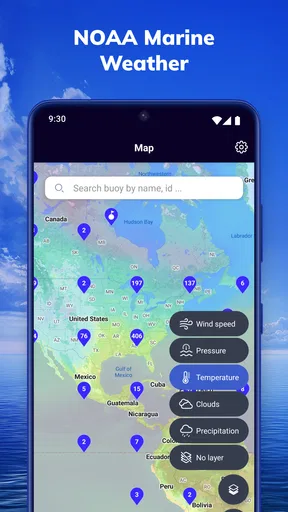
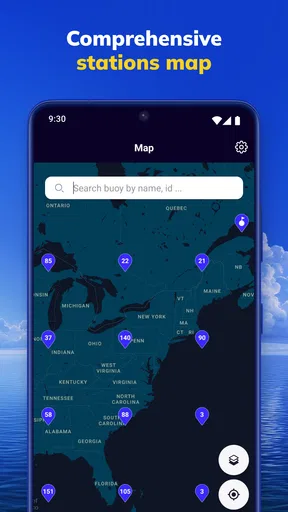
The first thing that strikes you when you open the app is its user-friendly interface. It's clean, straightforward, and easy to navigate. You don't have to be a tech wizard to find your way around. Everything is laid out in a manner that makes accessing information a breeze. The main screen presents you with a map displaying current weather conditions and forecasts, which is super handy when you're planning your route.
For me, the map is most useful as a way to orient a plan, not as a reason to zoom around aimlessly. I would start by identifying the relevant area and then check the forecast details for the places I expect to pass. That is a more deliberate workflow than tapping whichever location is closest, and it helps keep a broad visual overview connected to the actual trip I have in mind.
Features That Stand Out
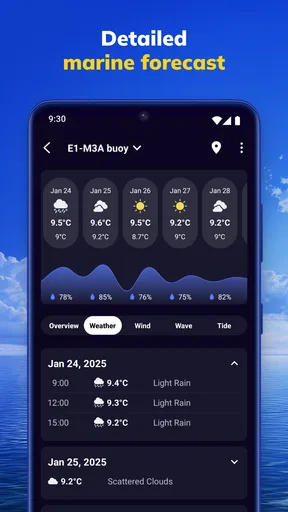
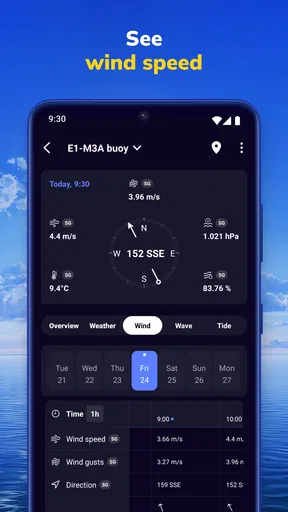
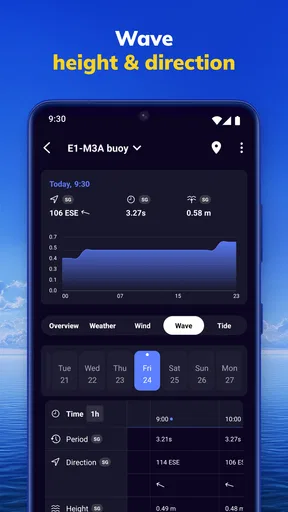
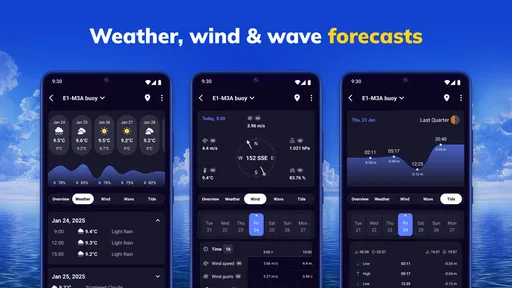
One of the standout features of the app is its detailed marine forecasts. You get everything from wind speed and direction to wave height and period. This information is crucial for ensuring a safe and enjoyable trip. The app also provides tide predictions, which can be a game changer when you're heading out to sea.
I would look at those pieces of information as a combination rather than isolated readings. A wind figure on its own does not tell me whether a particular outing is comfortable for my boat or crew, and tide timing can matter differently depending on where I plan to go. A useful tip is to compare the forecast with the conditions I know from previous trips; that makes the numbers more meaningful than trying to make a decision from an unfamiliar reading alone.
Another feature I particularly appreciate is the alerts. The app will notify you of any weather warnings in your area, so you'll never be caught off guard. It's like having a little guardian angel looking out for you.
I would treat alerts as a prompt to check the situation, rather than as a complete monitoring plan. Before heading out, I would make sure I have looked at the forecast for the relevant area and understand what I would do if a warning appears. If I am already on the water, the sensible response depends on my location and options, so a notification is useful only when paired with a plan for acting on it.
Real-Time Updates
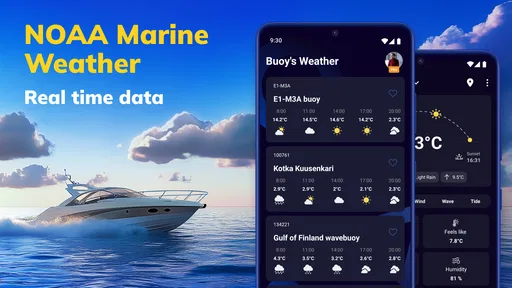
What's the point of a weather app if it doesn't give you real-time updates, right? Thankfully, NOAA Marine Weather ensures that you're always in the know. The app pulls data directly from NOAA, so you can trust that the information is accurate and up-to-date. This real-time data is crucial, especially when you're out on the water and need to make quick decisions.
Even with updates, I would avoid treating any forecast as a promise about what will happen next. Weather information is most helpful when I check it at useful decision points: before departure, before committing to a longer leg, and when a change in conditions makes me reconsider the plan. If the connection is unreliable, I would not assume a fresh update has arrived simply because the app is open.
Customizable Experience
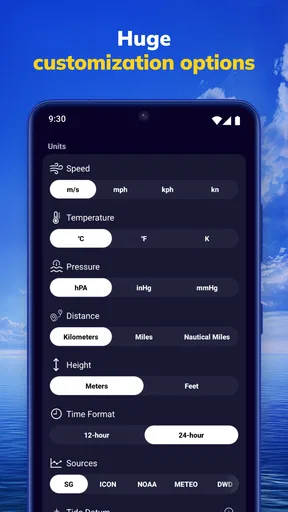
I love that the app allows you to customize the information you see. You can set your favorite locations and get weather updates specific to those areas. This feature is perfect if you have a few go-to spots for your marine adventures and want tailored information for each.
Saved locations are especially handy when a trip involves more than one familiar stop. I would keep the launch area and likely destination easy to reach, then check each rather than relying on a favorite that only represents the starting point. That simple setup can make a quick morning review more focused and reduce the temptation to make a route decision from incomplete context.
Offline Access
Let's face it, cell service can be spotty at best when you're out on the water. That's why the offline access feature is a lifesaver. You can download the latest weather data before you head out and access it even when you're off the grid. It's reassuring to know that you have the information you need, no matter where you are.
The key trade-off is freshness: an offline copy can help me refer back to what I downloaded, but it cannot tell me about a change that happened after I lost service. I would refresh before leaving, note when I last checked, and avoid letting offline availability create a false sense that I am still receiving updates. For trips where changing conditions matter, I would make decisions conservatively if I cannot get a current forecast.
Community Insights
One of the unexpected perks of the app is the community feel it offers. You can share your weather observations and experiences with other users. It's a great way to connect with fellow mariners and get insights from people who are in the same boat (pun intended) as you.
Community observations can add local color, but I would not let a stranger’s report outweigh a forecast or my own assessment of conditions. A report is most useful when I can relate it to the same area and time as my plans. I would use those contributions as context, not as a substitute for official information or a reason to ignore a warning.
To wrap it up, the NOAA Marine Weather app is a must-have for anyone who loves spending time on the water. Its comprehensive features, user-friendly interface, and reliable data make it an invaluable tool for planning and enjoying your marine adventures. Whether you're a seasoned sailor or a weekend warrior, this app will ensure you're always prepared for whatever the weather throws your way. So, why not give it a go? Set sail with confidence, knowing you have the best marine weather app at your fingertips.
My performance verdict
I would describe the app’s performance value in practical terms: its map, marine forecasts, alerts, saved places, and offline access are useful when they make preparation more organized. I cannot judge speed, stability, or resource use from feature descriptions alone, so I would test it on my own phone before depending on it for a demanding trip. If it opens reliably and the information I need is easy to reach, it earns a place in my planning routine; if it struggles on my device or I need broader weather tools, I would keep a suitable alternative alongside it.
Overall, this is a focused option for people who regularly make decisions around marine weather. I like the idea of bringing several relevant checks into one place, but I would use it with realistic expectations: refresh before departure, prepare for weak connectivity, and never treat an app as a replacement for sound judgment. For occasional shore-side weather checks, a simpler general app may be enough. For someone who plans fishing, sailing, or boating trips and wants marine-specific context, NOAA Marine Weather is worth trying.
Pros
- Accurate real-time weather data
- User-friendly interface
- Detailed marine forecasts
- Customizable alerts
- Offline maps available
Cons
- Limited free features
- Occasional loading delays
- Requires constant updates
- Battery consumption high
- Data can be overwhelming
FAQs for NOAA Marine Weather
What features does the NOAA Marine Weather app offer?
The NOAA Marine Weather app provides real-time weather forecasts, tide tables, and sea condition reports. It includes detailed radar and satellite imagery, as well as alerts for severe weather conditions. Users can customize settings to receive notifications about specific areas or conditions, making it a valuable tool for mariners and coastal residents.
Is the NOAA Marine Weather app available for both Android and iOS devices?
Yes, the NOAA Marine Weather app is available for download on both Android and iOS platforms. You can find it on the Google Play Store for Android devices and the Apple App Store for iOS devices. Ensure your device meets the app's technical requirements for optimal performance.
Does the NOAA Marine Weather app require an internet connection to function?
While the NOAA Marine Weather app can display some information offline, such as previously downloaded forecasts, an internet connection is generally required for real-time updates and to access the latest weather data. Mariners are advised to check forecasts in advance when planning activities.
How accurate are the forecasts provided by the NOAA Marine Weather app?
The app uses data directly from NOAA, a trusted authority in weather forecasting. While the forecasts are highly accurate, users should remember that weather conditions can change rapidly. It's advisable to frequently check for updates and use the app in conjunction with other safety measures when planning marine activities.
Is there a cost associated with using the NOAA Marine Weather app?
The basic version of the NOAA Marine Weather app is typically free, offering essential features like forecasts and alerts. However, there may be in-app purchases or a premium version that provides additional features, such as advanced radar tools or enhanced customization options. Check the app store for specific pricing details.


